Remembering/forgetting

Sunday Blog 234 – 17 May 2026

I’m in Margaret River for the Readers and Writers Festival. Previous visits to this town have washed me through with melancholy. Five years ago in 2021 when I attended the same event, I was gripped with a sharp grief at the absence of my parent’s generation. I could almost see Dad and his brother John emerging from the pub after a drink together. They were brothers but also friends across their long lives even though they were separated by a three hour drive. Margaret River was where our two families usually would catch up and reignite bonds.

In 2026, this feeling is gentler. Margaret River has become populated with new memories and new people, like my little great niece, born after Dad died.

Am I getting the hang of this life thing, as I race towards my 61st birthday? Now I am able to observe my great highs and lows with a small touch of perspective. For example, this week’s writerly rejection is already receding into “what was that fuss all about then?’’ One of the authors whose talk I attended this morning advised us to “embrace the no’s, because the yeses are out there.’’

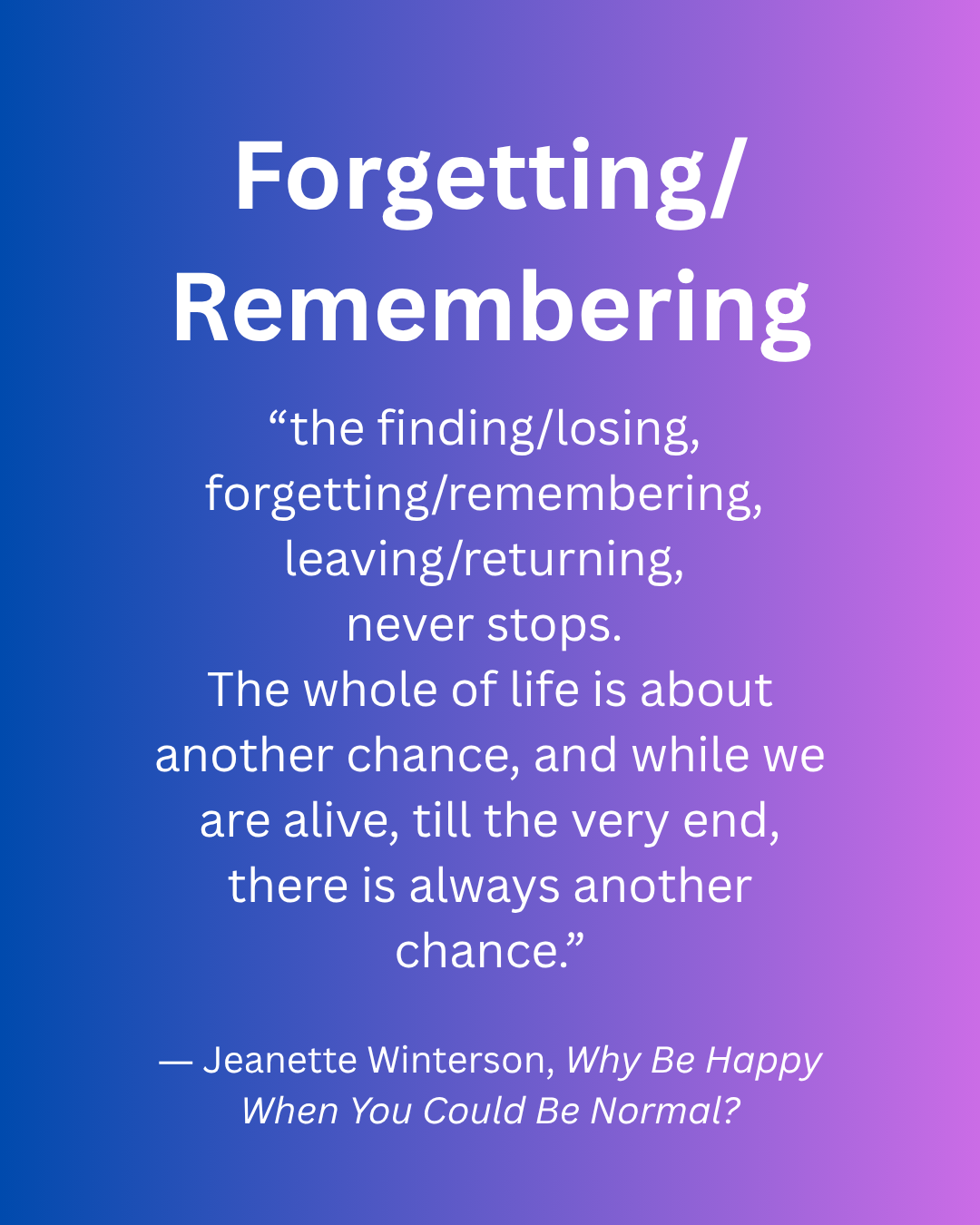
In case you needed to hear this today, “till the very end, there is always another chance.’’

Happy Sunday.

10 May

Sunday Blog 233 – 10th May 2026

There is a trigger warning for this post which contains the details and reflections of sexual assault. Please take care when reading or scroll on by if this is not for you.

“One day this date won’t mean anything. You won’t even remember it.” So said a friend of mine about that terrible date; 10th May 2002. At the time I was dubious, and twenty four years later, I know for sure this is not true.

Because on 10 May 2002, in the very early hours of the morning, a man broke into my beautiful, just-bought home and sexually assaulted me. I was 36 years old. My daughter, who was there at the time, was just three years old.

This horrific event was a slash in the canvas of my life; unlike anything I had ever endured. Up until then, my childhood and adventurous, fulfilling adult life had been fortunate.

So, I was closer to 40 than 30 before I began to understand trauma from the inside. Before I discovered the many blind spots I didn’t know I had, the words missing from my vocabulary.

In the first 72 hours, the attack replayed over and over in my mind. Although I’d accessed emergency services, I had no immediate follow-up counselling, so I ended up two weeks later in my GP’s office.

“You’ll have post-traumatic stress.”

I snatched at the term like a lifeline. It wasn’t like I had never heard the term, I just didn’t recognise I was experiencing it until a trusted health professional who knew me, named it for me.

This initiated voracious researching, and I learned that post-traumatic stress can get locked up in our bodies and our minds; but that each can initiate healing in the other. That post-traumatic stress can become post-traumatic stress disorder when the toxic, untethered memories flap about, setting off unnecessary alarm bells in situations that are safe.

Just a few days after the GP visit, I met some friends at a cafe I’d never been to before. Me and my daughter arrived early, and after a while, she needed a toilet stop. In the unfamiliar bathroom, after our business was done, I had my daughter on my hip and I turned out the light to leave, plunging us into darkness. I couldn’t find the door handle and a terror overtook my whole body. Because this was exactly what happened during the attack. Me trying to escape, my daughter on my hip, the deadlocked front door barring our exit.

Reason rushed in to reassure my body, that holding my child 0n my hip in darkness was OK. We were at a beautiful cafe. Friends were due to arrive in about an hour. Back at our table in the dappled sun, there was coffee and cake for me, and a sweet treat for my girl. There was no danger. So, being in the dark carrying my daughter was re-encoded as safe; and the panic evaporated. Like pulling a plug out of the socket.

This was spontaneous for me, but it got me wondering. Maybe post-traumatic stress after a shocking event like 1oth May was an inevitable fairground ride I would have to board. But could I use my mind to tame trauma triggers and avoid developing post-traumatic stress disorder?

I set about this task with the determination of a patient determined to walk again after a spinal accident. In the chaotic aftermath of the assault, I used my body to heal my mind and my mind to heal my body. I had every kind of body therapy you can think of, to rid my cells of the trauma. I summonsed all the perspective, resources, tools and mental practices I had gathered in my life.

But still, I had no language to describe difference between a grown adult like me experiencing trauma and a child. Eventually I gathered the term “single incident trauma” to name what I’d survived on 10 May 2002. Later, I learned that people who have survived childhood trauma have complex post traumatic stress.

There was yet one more term I came to learn. Post traumatic growth. I had not only survived 10 May 2002, I had incorporated bigger lessons, met and learned from survivors of trauma of all kinds.

Post-traumatic growth is a thing. It was named in research in the 1990s. I wondered that this was never mentioned to me in the early years and months after 10 May 2002.

Perhaps parading post traumatic growth too early could seem insensitive. But doesn’t it give us humans something to hope for? Because as I learned from people impacted by childhood trauma, we are wired to heal even from the worst of the worst. Sometimes just the slimmest line of hope from a kind adult reaching into the mess of an unsafe childhood can be enough to climb out of the abyss.

Would I even know any of this if it wasn’t for 10th May? I’m not sure. But I always remember this date. Always.

Happy twenty-fourth survivorversary to me.

If you need to reach out for help or to talk to someone, there are plenty of links on here and here and here

Hairy, misbehaving women

Sunday Blog 232 – 3 May 2026

A trigger warning applies to this blog as I end it with a disclosure of sexual assault I survived more than two decades ago. Please take care when reading.

It’s always illuminating to sup with the youngsters; Millennials, Gen Z’ers. At a recent dinner, the subject of the books The Queen’s Code and The King’s Code by Alison A. Armstrong surfaced.

In my generation we seemed to lurch from home into unsuitable pairings, often moving in with someone after a week of dating (or was that just me?) Co-dependance seemed to me the only way to do relationship number one (or ten), until I woke up from the lust fever dream and didn’t recognise who I had become. What was I doing on a golf course driving range? Why wasn’t I at home reading a good book?

The young people are smarter, always looking to optimise. Perhaps tired of watching their parents make a royal hash of their relationships, these two young people at least had turned to the Queen’s Code and King’s Code books to learn about how to have an intimate relationship.

One of the premises of the book (because now I have binge-listened to the audiobook of The Queen’s Code ) is that women can become frog farmers, i.e. turn their princes into frogs. One of the ways they do this is by constantly criticising and nit-picking their partners. The source of this carping can be traced back to holding men to women’s standards. Mistaking men for hairy, misbehaving women instead of completely different types of creatures that they are.

Men focus on one thing. Women have diffuse awareness. Men never see the value in doing anything, such as taking out the rubbish. But a timely prompt (prompt, not nag) from you can trigger them to put the garbage chore into their queue, and when it is the next indicated thing for them, it will be done. By telling a man what taking the rubbish out will provide for you, e.g. feeling supported, will give him motivation. Appreciating him doing the task completes the circle. Bye bye to nagging.

I’m not sure where I land on it all. None of what is discussed in the book covers violence against women. All the male protagonists are good men.

I think of #NotAllMenButAlwaysAMan. I recollect that back in 2002, in the weeks and months after surviving a home invasion and sexual assault, there were so many good men that were part of my healing. My partner, now my husband. The self-defence teacher. The acupuncturist. The lawyer friend. The entrepreneur friend who when we first met up after the assault asked me “what is the point of it all, if something like that can happen?”

And reading The Queen’s Code has been a nice holiday from the polarity of woman-good, man-bad. Plus, I’m keeping up with the young people.

Reflections on war

Sunday Blog 231 – 26th April 2026

November 11, Remembrance Day 2025. I’m at Perth airport on my way to Melbourne for a meeting. The incessant cacophony of plane announcements is interrupted just before 11am. A recorded voice breaks out with The Ode.

At the going down of the sun and in the morning, we will remember them.

The bugle refrain lasts long enough to tempt me to snicker at its cartoonish, slightly off-key quality, but then the minute’s silence falls. The uncanny quiet of the terminal grips me in the throat, the heart, the gut. All I can see is the image of my grandfather, Mum’s dad Geordie, at 17, in his World War One uniform. He’d lied about his age, succumbed to the relentless pressure and promise of adventure and had signed up for the slaughter of battle.

Photograph from World War One of Wilfred George (Geordie) Mulligan

Wilfred George (Geordie) Mulligan

I grew up with this photo of Geordie. It fought for space with the jumble of framed ancestors Mum had coated every cluttered bookshelf, mantelpiece and wall space with. After six decades, this photo, among the vast avalanche of all the things that were emptied from Mum’s home, has ended up at my house to be part of my daily life.

His uniform portrait, full length. The puttees bandaging his calves. The coat flaring at the hips. His very handsome face underneath the slouched hat. He’ll be shipped from Sydney to Egypt and Gallipoli, wounded in August 1915 and returned to Australia to heal. And back again, this time to France. He’ll be wounded again in September 1917 but back on duty by April 1918, where he’ll be taken as a prisoner of war in German hands. He’ll be rescued, taken back to England by November 1918 but won’t be repatriated until April 1919. Too emaciated to ship back earlier.

‘I didn’t cry the first time I went away, but I sure cried the second,’ he was known to say. Every Anzac Day, every Remembrance Day, his memory inspires me to say, ‘Lest we forget the horrors of war.’

At the airport, my throat feels like I’ve swallowed a mint whole. My eyes sting with unshed tears, and my heart swells with the piercing melancholy of everything passing. This reaction to Remembrance Day catches me off guard, like I’ve glimpsed the double of a long-ago, long-dead lover in the street. As if the death of Mum one year ago has thrust me into the front line of mourning, of holding remembrance.

I never met Geordie. He died aged 65, nearly three years before I was born. He was a handsome child, ‘the nicest boy in Rivervale’ as he was known. He’d met Essie, my grandmother, while they were still at school.

When he was back in Perth in 1915, healing from his first war injury, he’d re-connected with Essie. When he went back to France, she gave him this photo to hold close during the next round of suffering.

My grandmother Esther Florida Northey in 1916 - the photo she gave Geordie before he went back

Esther Florida Northey in 1916 in Perth

Yes, Geordie made it back after the war, but parts of the nicest boy in Rivervale were blasted clean for good.

And on this day in 2025, at the airport, this loss of Geordie’s essence gripped me with the raw freshness of a new grief, rather than a tragedy of more than a century ago. Do we have an Ode to crushed mental wellbeing? When the body survives to grind through the decades, battling the permanent chafe of the battlefield grit?

And so on this Anzac Day I say, ‘Lest we forget. Lest we forget the horror of war.’

On a Garner kick

Sunday Blog 230 – 12th April 2026

“Are you going to read all that?” the young waitress asked as she laid down my cappuccino in a mug in front of me with a flourish. And not a drop spilled. “That’s so impressive!”

I caught her accolade deftly, but I was hurtling along on the crest of the wave of How to End a Story: Collected Diaries 1978-1998 by Helen Garner. My Garner brick, I have been calling it. All 770 pages of it.

It was worth lugging it down to the cafe because I needed to hasten the end of her third marriage. It’s not suspense that carries me along. I know she has been free and happy for more than a quarter of a century. The way she has edited her diary entries takes me with her. I can see from her intimate account how easy it is to be entangled in a toxic relationship. To have been the frog who entered the sweet, tepid waters, about to be scalded alive.

I’m with her as she hangs on with the stubbornness of a partner who just wants their lying, cheating husband to tell the truth. With the pigheadedness of someone who doesn’t want to fail at marriage a third time. I just have to get to the end when she has finally, finally left him.

I pump my fist over and over in triumph at her delicious blue couch delivered to her, after she’s left, after she’s established herself in her independent accommodation.

Once the Garner brick is finished, more than two thirds polluted with mentions of the third husband, I’m onto reading reviews and articles. In this February 2026 Guardian interview, she comments on the third husband’s elliptical memoir, He, where she is despatched in just twelve lines. She found it funny. “I thought, OK, he put me in my place.”

And that’s why we love her.

Easter Cheer

Sunday Blog 229 – April 5, 2026

While still in Denmark for my writing break last week, someone or something I can no longer recall directed my attention to Rebecca Solnit’s latest book, The Beginning Comes After the End. Notes on a World of Change. The reviewer promised that it was a book of positivity in a relentless barrage of negativity that is this world we currently live in. I couldn’t resist this.

For some peculiar reason, I haven’t read any of Solnit’s other books. She is best known for generating the term “mansplaining” after the experience of having a man tell her about her 2003 biography and cultural history of the photographer Eadweard Muybridge.

Some time ago I began to seek perspective on world events by dipping back into history, listening to podcasts on the French Revolution, or the Napoleonic Wars and on and on. What we have survived is reassuring to me. This too, will pass.

Rebecca Solnit’s book brings me back into now, but from an eagle eyed view. The book’s ultimate message is that “these brutal politics are a backlash against the vision of interconnection.” (Chapter 6, The Disconnectors.)

The long list of accomplishments and progression relating to civil rights campaigned for and achieved, the appreciation of first nation’s land management practises are dwelled on. What we have achieved in terms of looking after our environment. Her hypnotic, kind voice points out that there are positive signs in our world, along with the brutal chaos. Everything is happening at once, so there is both regression and progression.

Am I doing this book justice? The immersive experience of listening to it was such a soul balm that I am struggling to articulate its impact clearly. There was even the joyous moment for me where she refers to one of my favourite novels Howard’s End and its epigraph, ‘Only Connect.’ I am so taken with this I’ve had tattooed on my right shoulder a couple of years ago.

So if you feel the need for an Easter reset, listening to the audiobook version of The Beginning Comes After the End may just be the thing.

Losing my voice

Sunday Blog 228 – 29th March 2026

I could be forgiven for thinking that Mercury retrograde had its claws in me. Only it finished a couple of days before I found myself on Monday in my very reliable car at my local shopping centre, everything packed for a self-guided writing retreat getaway. Well, almost everything. I was missing my very favourite fountain pen, which I could not locate. I had let that go. There was just one more errand until I could pick up my writing buddy and we could be on our way. It was a nearly five-hour drive, so I was keen to catch the early morning hours when I’m freshest.

With all my tasks ticked off, I slid into the car. It would not, would not move from Park to Drive. I tried all the things. Leaving it for a while. Turning it on and off. Walking home to pick up the other fob, just in case that worked.

Nothing.

I had to call for roadside assistance.

Normally, this would be a simple thing. But like many support services, you need to answer verbal prompts before actually joining the queue to speak to a humanoid.

But on this day, my voice, which had begun to fade into barks and croaks the day before, had completely disappeared. The cold that had started during the week before, that I had tried to de-create with positive thinking was not so easily dissuaded.

I tried to bark my address into the phone, but the bot was having trouble hearing my laryngitic voice. Was I doomed to be stuck on hold forever, just like the Scottish men stuck in the voice activated lift trying to get to level eleven? (Watch this if you have 3 mins. Too funny.)

Mustering up as much sound as I could, I stage whispered my details again into the phone. Finally I was put through to someone who could accommodate my hoarse whispering to get the information she needed. A maximum of two-hour wait was announced.

Watching the fresh morning slip away, I texted my travel companion to alert her to the delay.

I had just enough time to wonder morbidly if I should go on this long-anticipated retreat after all. Fretted about spreading my germs.

The roadside help mechanic couldn’t get my car out of Park either, and couldn’t determine what was causing the fault. He eventually over-rode it so I could at least drive the car home and get my regular mechanic to review it later that day.

By now it was lunchtime, and in desperation I messaged my husband to see if I could drive his car instead. He texted me back immediately with a yes. As I waited for him, I emptied the car of my luggage as best as I could with the roulette wheel of which door would decide to open when I clicked the fob. The boot was particularly cantankerous but eventually yielded. In between lugging my suitcases and endless bags to the porch, I pummelled the car and shouted at it. I was alone with no witnesses to my tantrum. Alas this also had no impact on the car.

Darling husband arrived home at the same time as my road-trip companion, and finally we were on the way.

The drive was eerily quiet. Our long-awaited opportunity to catch up and debrief was squandered in the silent journey, with me trying to whisper a pleasantry every now and again.

The sudden smiting of my power of speech reminded me of when I moved to Greece in 1996, knowing only the words for hello and goodbye. Not much of a boast, as they’re the same word. Conversation is a vital exchange, and its absence stripped me of power and independence.

As the youngest of six children, verbal repartee was how we manifested our sibling rivalry. Landing the wickedest pun at the highest volume in order to be heard over the din was everything. As a young adult, I clearly took these skills a little too far, and was known by my friends as Razor Tongue.

But despite the social vacuum in the car ride, we made it safely to our writing getaway, albeit many hours after we had hoped to arrive. My voice gradually returned after 48 hours, not the one to two weeks the interwebs had prognosticated.

Emboldened by this, I decided I would purchase a replacement for my very favourite fountain pen. Stick it to the cruel universe. I would feel the flow of my pen over paper during the writing retreat. The small town we were staying in had several shops, including stationery, but no fountain pens. A half-hour drive to a bigger town saw me scanning the aisles of a chain stationery store and snatching up a substitute pen in a snazzy blue colour.

Back at our Airbnb, I opened up the pen to assemble it and plunge into its tactile joyousness.

But. It was a ballpoint pen. A superior one. But not a fountain pen like my favourite.

Darling husband found my fountain pen, which will be there when I return later today. But why? Why?

Sometimes, the universe will have its bloody annoying way.

New Salt Path revelations…

Sunday Blog 227 – 22nd March 2026

When The Observer article first dropped in July 2025, questioning the truth of the memoir The Salt Path, I was riveted. The article is entitled ‘The real Salt Path: how a blockbuster book and film were spun from lies, deceit and desperation.’

Let me summarise for you. The Salt Path author’s nom-de-plume is Raynor Winn. Her actual name is Sally Walker. Her memoir posits that she and her husband lost their home through no fault of their own, and then he was diagnosed with the hideous cortico-basal-degeneration disease – CBD. In the face of these two monumental setbacks, they took up their rucksacks and hiking boots and headed to the Salt Path – the South Downs Way – in the UK. He is miraculously cured by all that walking and they re-establish themselves financially and all is joy.

Two other spin-off books with the same narrative arc of man-is-sick-man-and-wife-walk-man-gets-better have since been published, and all have done well. Walker has been a cash cow for the publisher Penguin.

Enter The Observer article which revealed that Sally Walker had embezzled more than 64,000 pounds from her employer when she was bookkeeping at his real estate company in a sleepy little UK village. When her dodgy accounting was revealed, Sally Walker begged them not to press charges and repaid the money by drumming up a loan with heinously large interest payments, using her home as collateral. Over time the loan was called in, and that’s how she lost the house.

Doubts have also been cast on her husband’s CBD diagnosis which usually has a six-eight year prognosis. He is still alive and quite hearty more than thirteen years after his diagnosis.

Anyone, like myself, who attempts memoir understands that the whole truth can never be told. Only my version of events, through my idiosyncratic lenses and biases. But. As the quote from one of my favourite authors that begins this blog says, we as writers have to put down the bad and stupid things we do.

Like Wil Patterson did in his memoir Mr Ordinary Goes to Jail where he traces his gradually escalating financial pressure to provide the lifestyle his spouse wanted. And then there is the day when he sees a cheque cross his desk (he works in insurance) which is made out to his name. He banks it, panics and then – nothing. Nobody notices, and so bit by bit he steals cheques that are not made out to him. On and on it goes, but eventually he is caught and fully co-operates with the police. He also shares the experience of his three-year sentence and what he learned about the prison system. It’s a deeply human book. Maybe Sally Walker could have written that book, but instead she chose to write a novel in which she cast herself as innocent victim. And markets it as a memoir.

The journalist who broke the Salt Path story, Chloe Hadjimatheou, has recently done a seven-part podcast on the controversy, bringing yet more deceit to light. I binge-listened to it. Public service announcement – you have to sign up to the Observer podcast as a free trial to hear the last episode so you may as well sign up in the beginning and save yourself all those ads.

In case you don’t have the time required to listen to it all, I can share some nuggets:

  • The affecting scene in the book and movie where the bailiffs knock on the door? Didn’t happen. They’d already long left.
  • As well as embezzling from her employer, Sally Walker stole from her parents-in- law. And her mother. She has never faced criminal charges on any of her thefts.

I could go on and on. Penguin still lists The Salt Path as an unflinchingly honest memoir. It’s nothing of the sort. It’s a literary heist on the public’s sympathy and kind hearts.

Here’s forever and always to the Garners of this world, the memoirists who tackle writing all the worst things about ourselves, honouring the integrity contract between author and reader.

No longer the butt of Kitty Flanagan’s jokes

Sunday Blog 226 – 15th March 2026

As the youngest in my family, I am the only Gen-Xer in a sea of Boomers. I take some pride in that. After all, having suffered for all those years being the smallest, weakest and slowest, I am now basking in the smugness of being the youngest and trendiest of my siblings.

So imagine my horror to find myself the butt of Kitty Flanagan’s jokes about how to spot a Gen-Xer. It’s obvious because we use book-like phone covers, with actual credit cards stored in the fly leaf of the book-like cover, if you will. (See pink phone case above, now off to its new home on the Buy and Sell group.)

Some time ago I did put my digital credit cards in my iPhone wallet, but I found my fingers tripping and fumbling at the cash register when trying to tap and go. So I’d regressed back to using the actual credit card. Because they were sitting there, right in that age-defining, Gen-X pink phone case.

After watching Kitty’s skit, I looked around me, and sure enough, I could see a demarcation line between women my age who were keeping up with the techy trends, with just a phone cover on the back of the phone, and those book-phone nerds like myself who were falling behind.

This failure ate away at me. Onto my lengthy to-do list it went “purchase a new phone case asap.”

I started practicing my tap and go, and planned to get a new, clear phone cover. My magnificent yellow phone had been cloaked in a pink phone cover which both aged me and occluded the buttercup tones of my device. But I wasn’t completely stupid and vowed to get a screen cover so my exposed phone screen would survive the transition from the pink book.

“Would you like another screen cover on top of the one you’ve already got?” the man at one of those phone shops in the middle of the shopping centre aisle asked.

Doh. “Um, no thanks.”

“Would like plain or sparkly?”

“Sparkly. Definitely sparkly.”

So I’m back in the tech game for the next six seconds at least, no more the butt of Kitty Flanagan’s jokes.

I saw “Wuthering Heights” and I liked it…

Sunday Blog 225 – 8th March 2026

[With apologies for the ear worm I’ve planted]

Like many youngest children of large families, I read books when perhaps I was too young to fully comprehend them.

Wuthering Heights was one such book. I can’t count the number of times I read it as a teen, stumbling through the Yorkshire dialect and trying to visualise the dark, powerful moors and dysfunctional households. Bit by bit I made more sense of it the book.

I studied Literature in High School and still recall the long, ranty essay I wrote to refute the notion that Wuthering Heights as a book dies when Catherine does. With passion I asserted that the second half of the book was every bit as good as the first. “Your essay is as wild as the moors you are writing about” was one comment from the teacher, but any criticism of Wuthering Heights at the time generated a vociferous, if incoherent defence.

I continued to re-read the book as I matured, and eventually formed the view that there’s something wild and unformed about Emily Brontë’s only published work that has adolescent appeal. That it is better to read it while still on the cusp of adulthood as I did, to appreciate it. Otherwise it may come off as shrill and histrionic.

All this to say, I enjoyed the 2026 “Wuthering Heights” movie adaptation as a creative riff on a classic work. For me it was satisfying to end the movie when Catherine died, and to utilise the lush possibilities of sets and costumes to consummate the desperately unhealthy connection between Catherine and Heathcliff. The movie passes beyond the worldly experience Emily Brontë had and weaves its way to modern times with the Yorkshire moors still as the star of the show. As they should be.

As least, that’s how I experienced it.